My First VFX Project
Armorsaurs
From my time at Pixel Zoo, this project was by far the most enjoyable for me. It was a project that pushed both my technical and creative skills to new levels. The challenge of creating high-quality assets for live action VFX. From detailed materials to optimized environments, it was incredibly rewarding. Collaborating with a talented team to bring imaginative concepts to life inspired me every day, and seeing the final work meet such a high standard of quality made it a truly fulfilling experience.
Most of my time on this project was spent fixing and creating shaders. However I had the privilege of working on some wonderful sets.
(This project is still in production - These Renders are my own and are not finals)
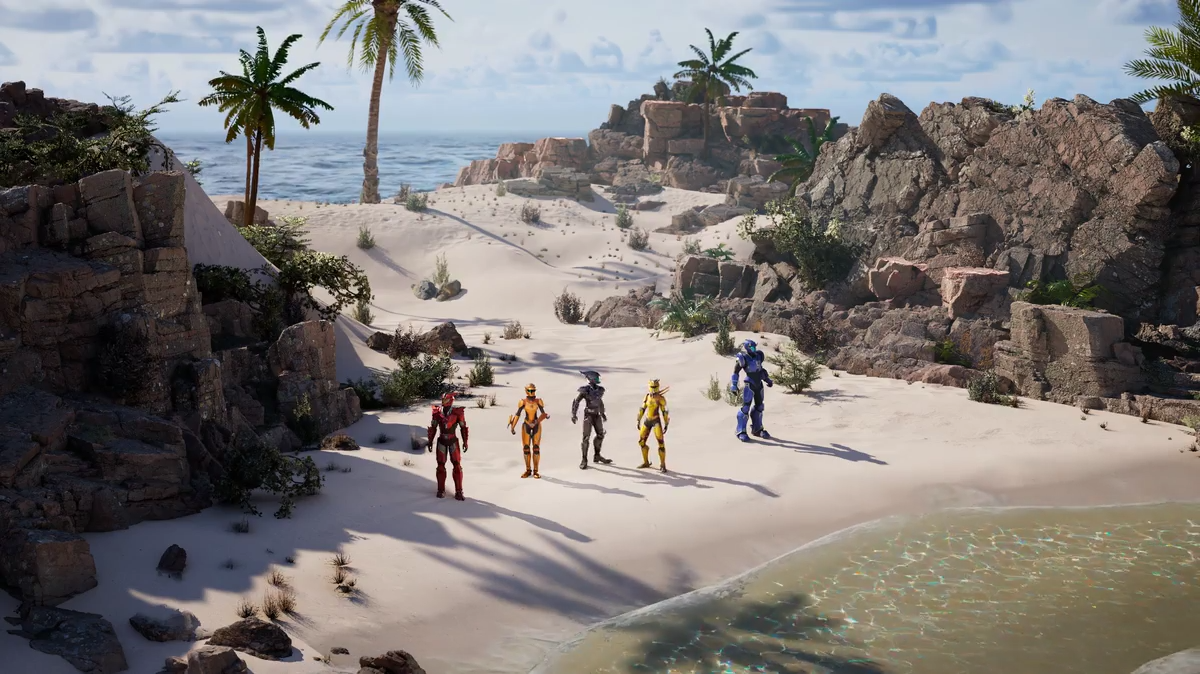
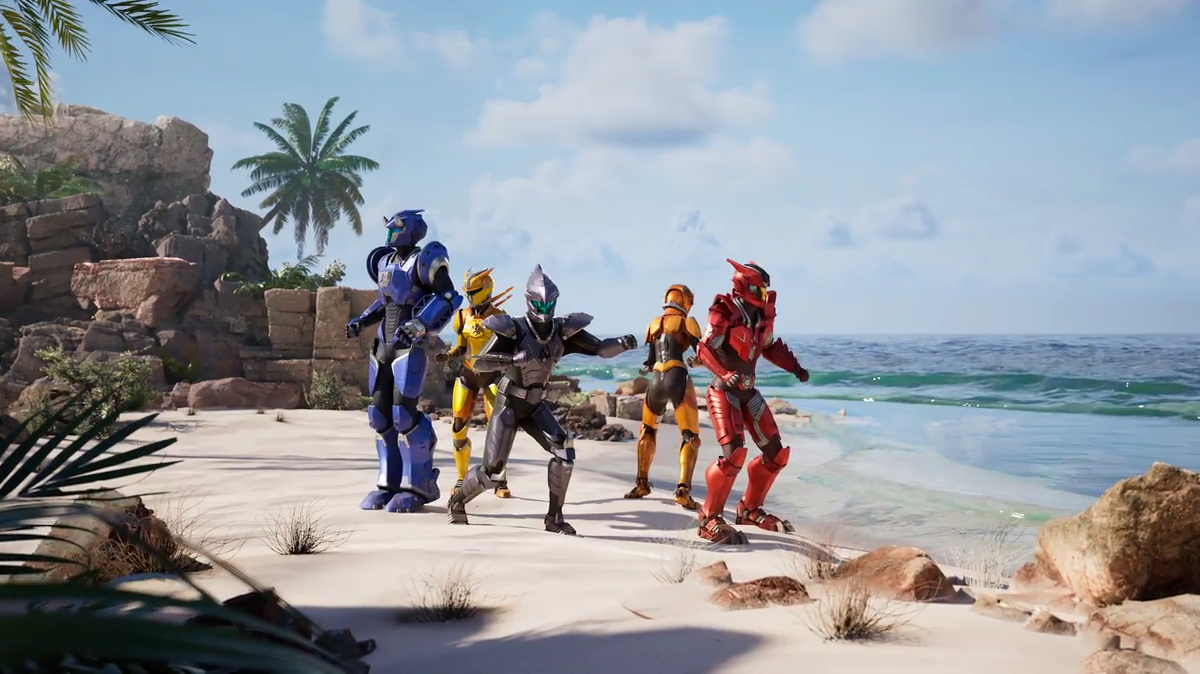
This is a beach set that I was responsible for creating. I had been given a proxy set, an animatic and director references for what he wanted. Using a landscape material I had made, along with Virtual Texture streaming and custom Megascans Master Materials, I spent about a Week creating this set.
A large part of this set was the water, I ended up using Fluid Flux after experimenting with a few other water options. Fluid flux is a wonderful Unreal Engine fluid simulation tool, it has a large array of parameters and so took some time to get under the hood and really understand how I could use it for what we wanted. An important factor here was making sure that nothing in the scene would have any problems when it came to rendering.
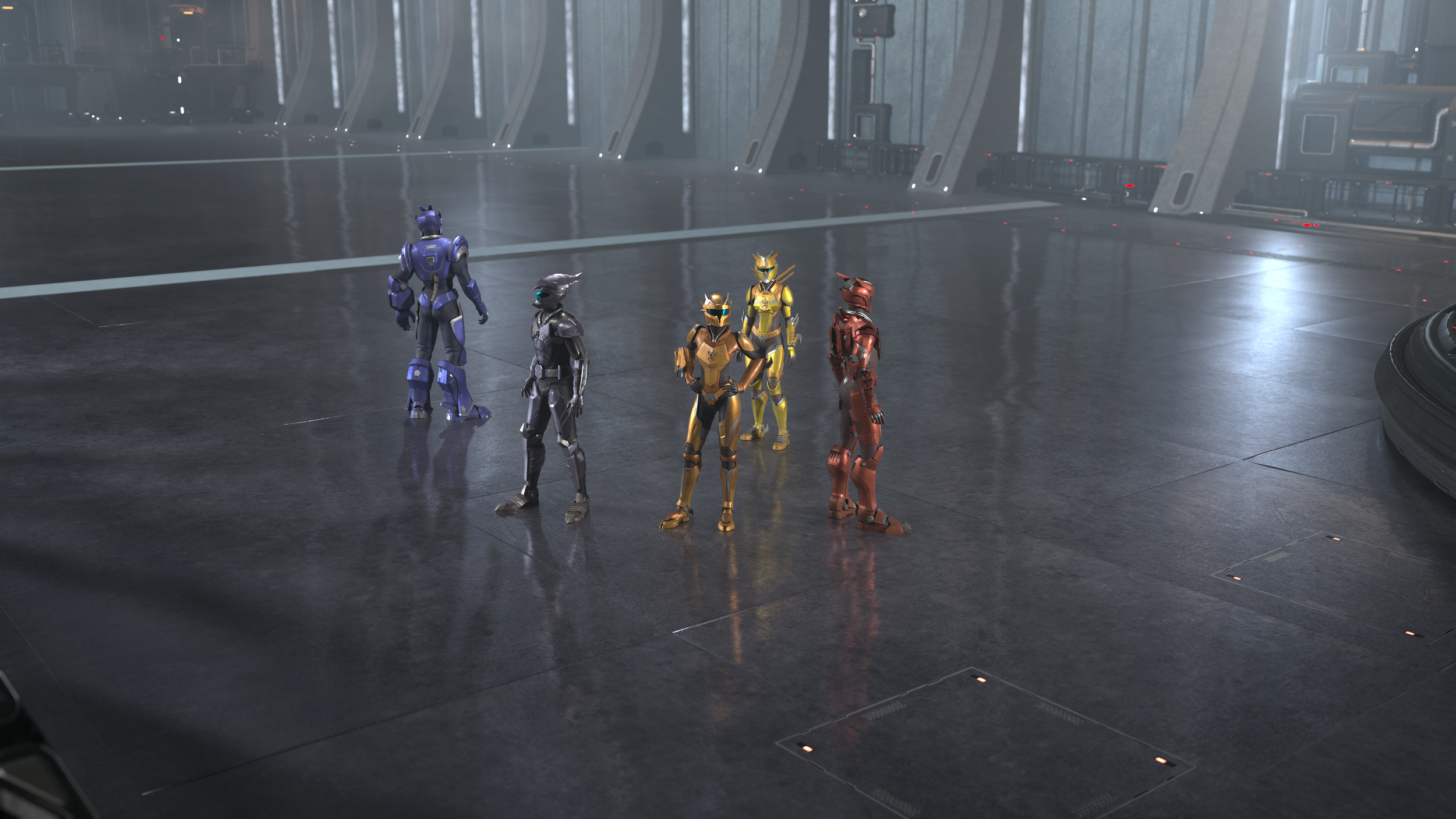
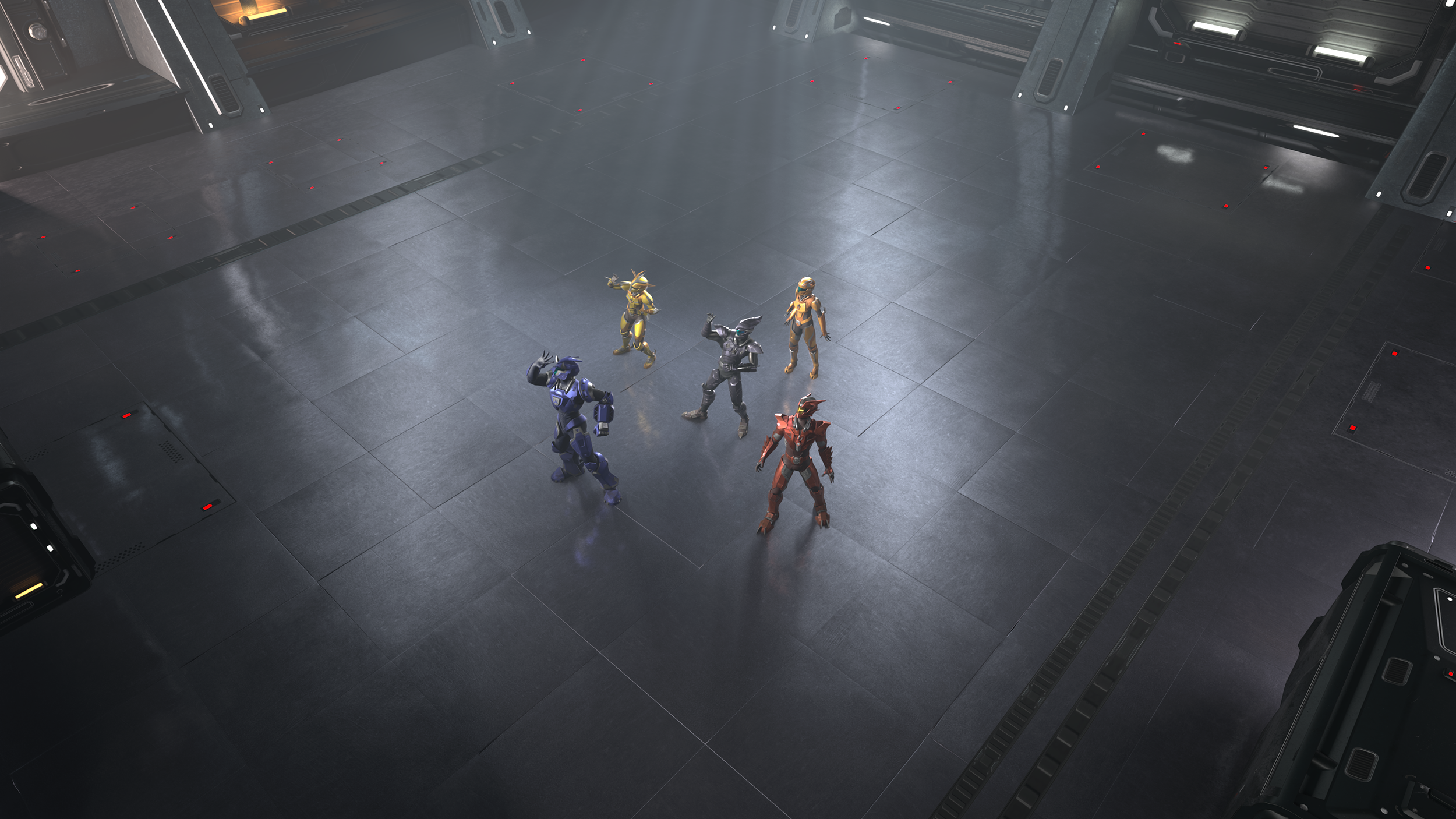
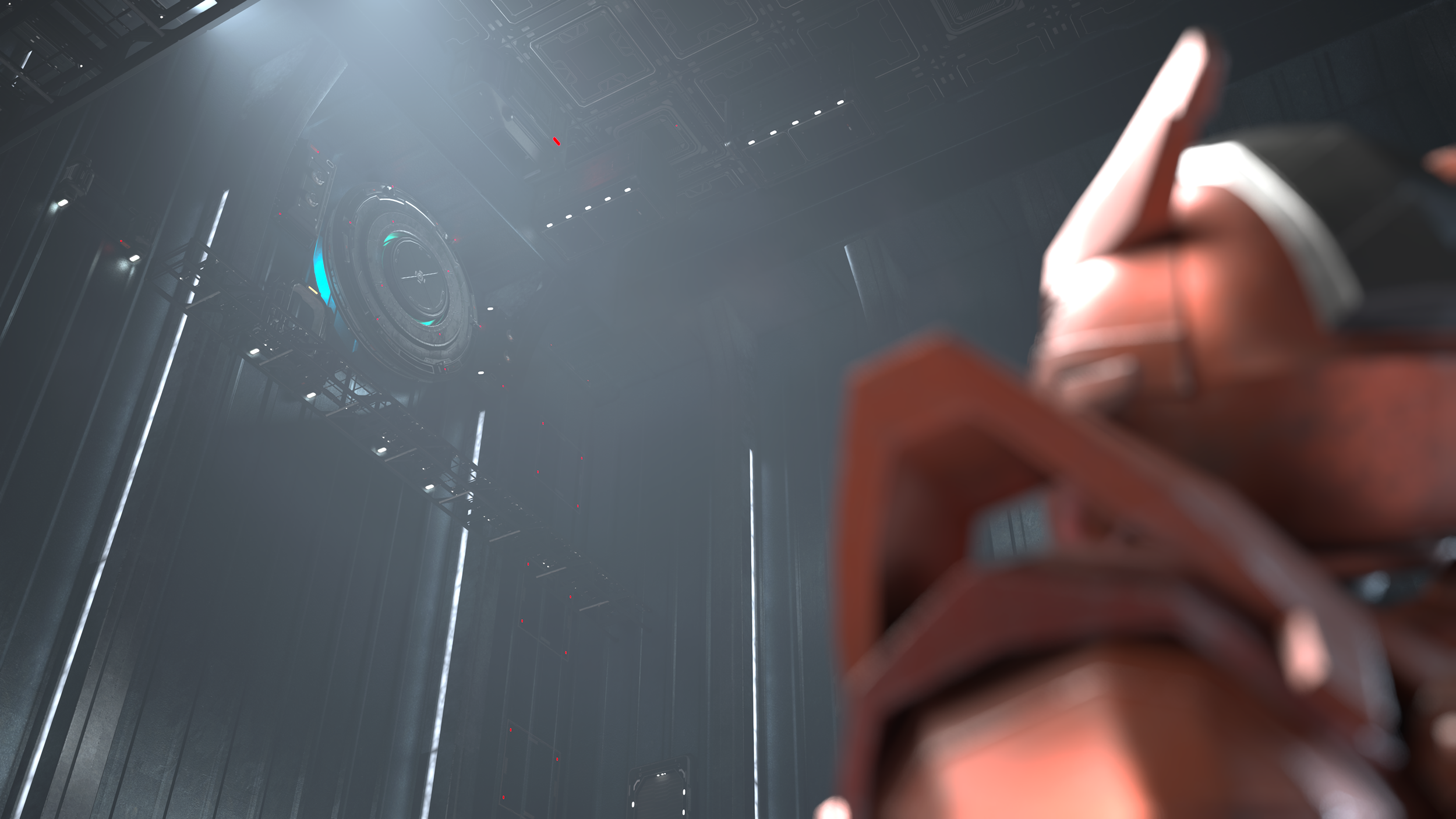
This set was named the Holodeck. It was scripted to be a room in which a training simulation would take place. I had much less to work with in terms of artistic reference when building this set. There were two main concepts I wanted to push to the viewer; that this room was very large, and that this room was high tech. I worked very closely with the lighting lead to design this set, starting with general shape and moving further into materials and details. Coming from Video Games meant that I built this set modularly. Allowing myself and the lighting team to build it up and out with ease, it also makes the set lighter on render times.
I learnt a lot while building this. Although modelling for a modular environment has its challenges, most of them came from trying to create the right shape and feel. The more challenging aspect for me was trying to achieve realistic metal reflections. Following the PBR workflow when working in Unreal Engine’s Substrate Materials doesn’t always achieve the metallic results that one hopes for. This is when in VFX the visual quality is the priority, and striking a balance between story telling and realism is the real skill.
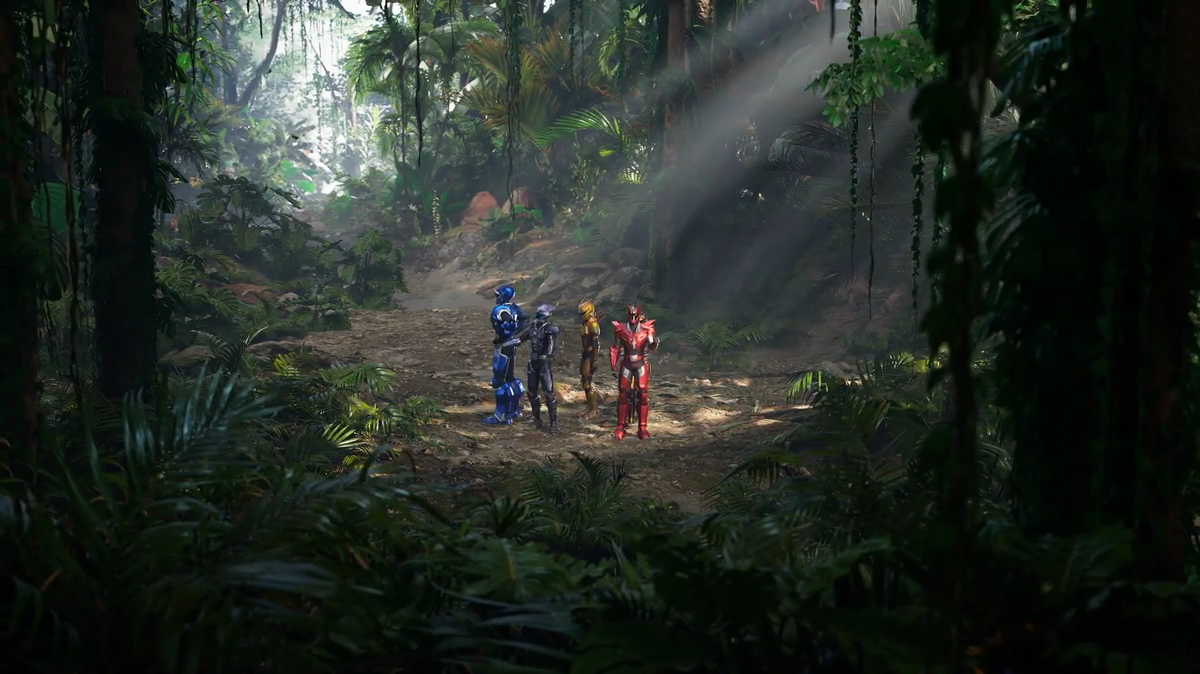
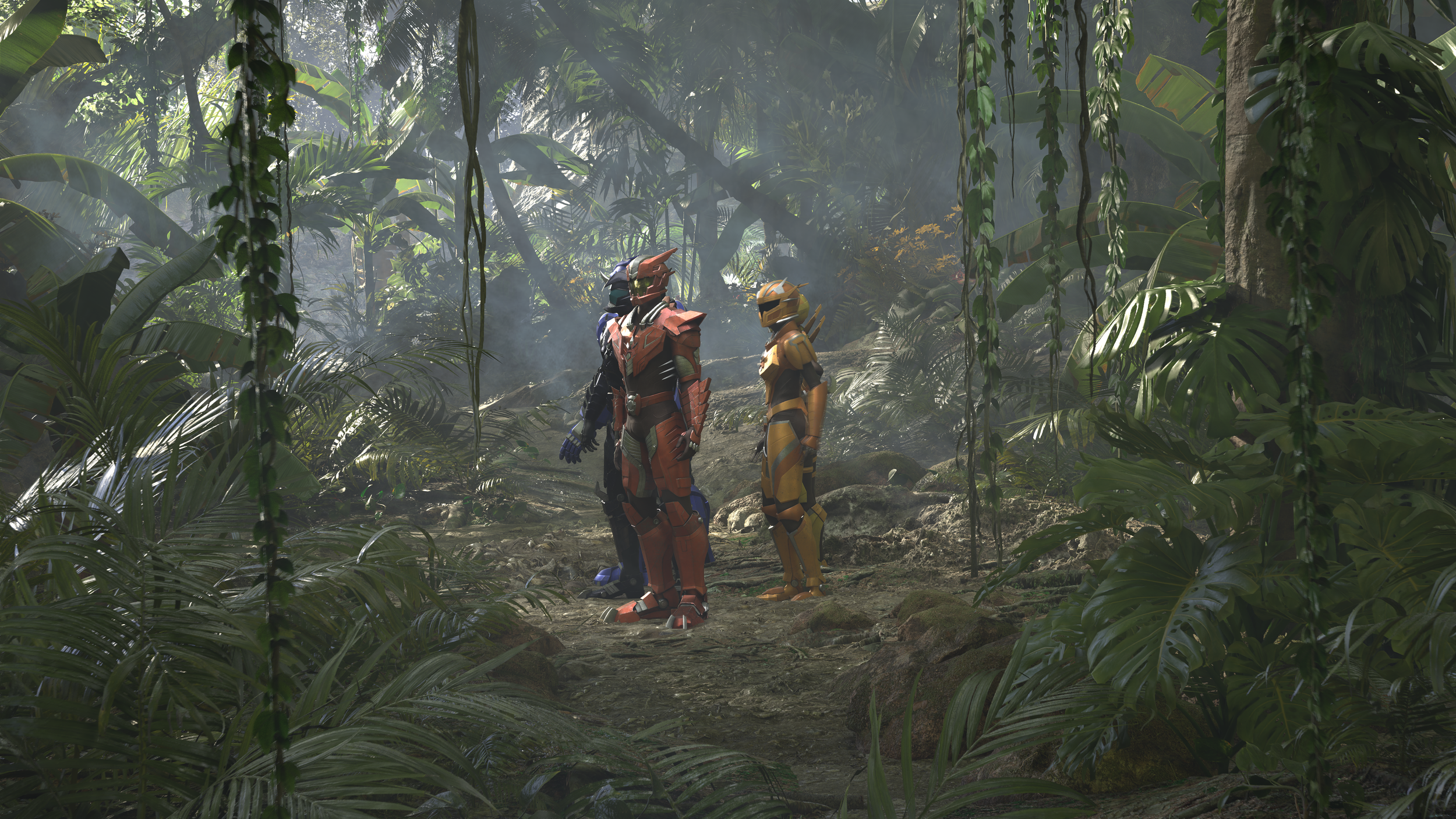
This Jungle was one of the first sets that I worked on during my time on Armorsaurs. It was a technical challenge. Making this set suitably optimised took a lot of work. The first task was getting all foliage onto the same Master Material. This meant creating a material that could cover all bases, while being efficient enough. We ended up with two master materials, one for foliage leaves and one for foliage bark. We also had plenty of problem solving because of our use of Substrate and Lumin, which when combined can be slightly problematic.
We had originally created a landscape for this set, but this started giving us trouble during renders. So we swapped it out for a mesh with vertex painting. We combined this with Defer Decals. I worked closely with the lighting lead to make a Defer Decal Master Material that would give him all the controls he was looking for. This largely revolved around being able to use different tiling materials as well as different grunge masks, as well as using the diffuse map to drive different transparency areas.
The work on this set was technical and tricky, but was in the end a team effort and I learnt a lot during it. Similar to all of my time on Armorsaurs.